Understanding Mandala Design for Patterns: A Complete Guide to Structure, Symbolism, and Creative Application
Mandala design is one of the most enduring and visually compelling pattern traditions in human history. From ancient spiritual art to modern digital graphics, the mandala has transcended cultures, religions, and eras to become a staple of pattern design across the globe. Whether you are a designer looking to expand your repertoire, a hobbyist exploring new creative outlets, or simply someone curious about the appeal of these intricate circular compositions, understanding mandala design for patterns offers rich rewards. This guide will walk you through everything you need to know—from the origins and core principles of mandala structure to practical techniques for creating your own patterns and applying them in modern contexts.
What Is a Mandala? Defining the Core Concept
At its simplest, a mandala is a geometric configuration of symbols arranged in a circular, radial, or concentric layout. The word "mandala" comes from the ancient Indian language of Sanskrit and means "circle" or "center." But a mandala is far more than just a round drawing. It represents wholeness, unity, and the infinite nature of the universe. In pattern design, the mandala structure provides a framework for creating balanced, repetitive, and deeply harmonious designs that draw the eye inward toward a central focal point.
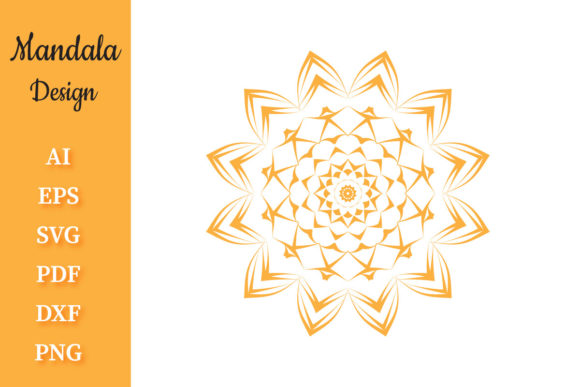
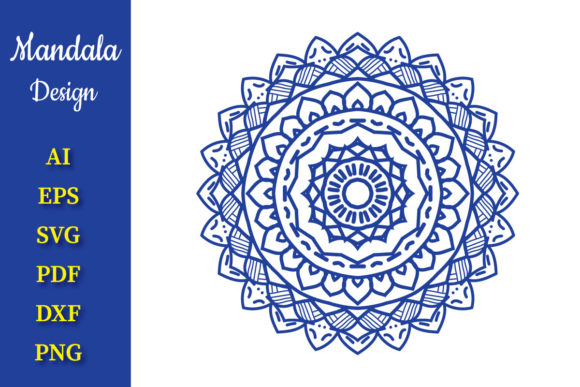
Mandala patterns are characterized by their symmetrical repetition of shapes, motifs, and lines radiating outward from a center. This radial symmetry is what gives mandala patterns their distinctive meditative quality and visual stability. Unlike random or flowing patterns, mandalas rely on precise geometry and intentional repetition to create a sense of order and calm.
The Historical and Cultural Roots of Mandala Pattern Design
To truly understand mandala design for patterns, it helps to appreciate where these forms come from and why they have persisted for thousands of years. Mandalas appear in diverse cultures across time, each adding its own flavor to the fundamental circular structure.
Ancient Origins in Hinduism and Buddhism
Mandalas have deep roots in Hindu and Buddhist traditions, where they serve as spiritual symbols and meditation aids. In these contexts, a mandala represents the cosmos and the journey from the outer world to the inner self. Monks and practitioners would create intricate sand mandalas as a practice of mindfulness and impermanence—spending days on a design only to sweep it away upon completion. The geometric precision of these traditional mandalas influenced countless patterns in religious art, architecture, and manuscript illumination across Asia.
Native American and Indigenous Mandala Traditions
Circular patterns similar to mandalas appear in Native American cultures, particularly in the form of dreamcatchers, medicine wheels, and sand paintings. These designs often incorporate natural symbols like animal tracks, celestial bodies, and seasonal cycles. The radial symmetry of these patterns reflects a worldview centered on harmony with nature and the cyclical rhythms of life.
Celtic and European Circular Patterns
In Europe, Celtic knotwork and rosette patterns in Gothic cathedrals share visual DNA with mandala design. The intricate interlacing of lines and the repeated radial symmetry in stained glass windows, stone carvings, and illuminated manuscripts demonstrate a universal human attraction to circular, ordered patterns. These European variations influenced modern decorative arts and continue to inspire pattern designers today.
Key Principles of Mandala Design for Patterns
Creating successful mandala patterns requires understanding a few fundamental principles. These guidelines apply whether you are drawing by hand or working in digital software.
Radial Symmetry
The hallmark of any mandala pattern is radial symmetry. This means that elements repeat around a central axis, often in equal increments. Common divisions include 4-fold, 6-fold, 8-fold, and 12-fold symmetry. The more divisions you use, the more intricate and detailed your pattern becomes. Radial symmetry creates a natural sense of balance and harmony that the human eye finds deeply pleasing.
Repetition with Variation
While repetition is essential for establishing a pattern, pure repetition can become monotonous. Effective mandala designs introduce subtle variations in size, shape, or color as elements move outward from the center. This creates visual interest and a sense of growth or expansion. Think of flower petals that repeat but gradually change size, or geometric rings that alternate between solid and dashed lines.
Layering and Depth
A compelling mandala pattern typically consists of multiple concentric layers or rings. Each layer may contain different motifs—some simple, some complex. The interplay between layers creates depth and invites the viewer to explore the pattern progressively. Starting from a small central element and adding increasingly elaborate rings outward is a classic approach to mandala construction.
Focal Point and Flow
Every mandala pattern needs a clear center or focal point. This could be a dot, a small flower, a geometric shape, or a symbolic element. From this center, the pattern should guide the eye outward in a natural, rhythmic flow. The best mandala patterns feel both grounded at the center and expansive at the edges.
Practical Applications of Mandala Patterns in Modern Life
Mandala design is far from a relic of ancient traditions. Today, these patterns are used in a wide range of fields, from commercial design to personal wellness. Understanding how to create and adapt mandala patterns opens up numerous practical opportunities.
Graphic Design and Branding
Mandala patterns are popular in logo design, packaging, and branding materials. Their symmetrical, harmonious appearance conveys balance, trust, and sophistication. Many wellness brands, yoga studios, and holistic businesses use mandala-inspired patterns in their visual identity. The repeating nature of these patterns also makes them excellent for background textures, website headers, and social media graphics.
Textile and Surface Pattern Design
In the world of fashion and home decor, mandala patterns are a perennial favorite. They appear on fabrics, carpets, wallpaper, and ceramic tiles. The radial structure translates beautifully onto circular surfaces like plates and rugs, but can also be adapted for rectangular formats by repeating the mandala motif in a grid. Designers often create seamless repeating patterns based on a single mandala unit, allowing for continuous use across large surfaces.
Art Therapy and Mindfulness
Coloring and drawing mandalas has become a widely recognized tool for relaxation and mental clarity. The repetitive, structured nature of mandala patterns helps calm the mind and reduce anxiety. Many art therapists incorporate mandala creation into their practice as a way for clients to focus, express emotions, and find a sense of control. Online coloring books, printable templates, and digital coloring apps featuring mandala patterns are immensely popular for this reason.
Digital and Generative Art
With the rise of digital design tools, mandala patterns have found new life in generative art and procedural design. Software like Adobe Illustrator, Procreate, and various mandala generators allow creators to produce complex patterns with perfect symmetry in minutes. Algorithms can rotate, scale, and layer elements automatically, making it possible to create infinite variations from a single set of base components. This has expanded the creative possibilities of mandala design far beyond what can be achieved by hand alone.
How to Create Your Own Mandala Pattern: A Step-by-Step Approach
If you are ready to try creating mandala patterns yourself, the process is both accessible and deeply rewarding. Here is a practical guide to get you started.
Step 1: Gather Your Tools
For hand-drawn mandalas, you will need paper, a pencil, a ruler, a compass, and an eraser. Fine-tipped markers or pens are excellent for adding detail. For digital creation, any vector graphics software or a dedicated mandala app will work well. Many digital tools offer symmetry features that automate the repeating process.
Step 2: Establish Your Center and Symmetry
Begin by marking the center of your page. Use a compass to draw a series of concentric circles at regular intervals. These circles will serve as guides for your layers. Next, divide the circle into equal segments using a protractor or by rotating your compass. For an 8-fold symmetry, you would create 8 evenly spaced radial lines. This grid forms the backbone of your pattern.
Step 3: Design Your Base Motif
Choose a simple shape or symbol to place at the center. This could be a small circle, a petal shape, a star, or a dot. Then, working outward, add new motifs along your radial guides in each ring. Repeat the same motif in each segment of a given ring to maintain symmetry. As you move to the next ring, introduce a different motif or vary the size of the previous one.
Step 4: Build Layers Gradually
Continue adding rings outward, each with its own motif. You might alternate between geometric shapes, floral forms, and decorative lines. Pay attention to the balance between empty space and filled areas. A good mandala pattern breathes—it has moments of simplicity and moments of complexity. Avoid overcrowding any single layer.
Step 5: Refine and Add Details
Once the basic structure is in place, go back and refine your lines. Add dots, small strokes, or secondary patterns within larger shapes. This detailing stage is where the mandala comes alive. It is also the most meditative phase, as you repeat small motions across many segments.
Common Misunderstandings About Mandala Design for Patterns
As with any popular art form, several misconceptions surround mandala patterns. Clarifying these can help you approach the subject with a clearer understanding.
Misunderstanding 1: Mandalas must be spiritual or religious. While mandalas have spiritual origins, they are not inherently religious. Many people create and enjoy mandala patterns purely for their aesthetic and psychological benefits. You can design a mandala pattern without any spiritual intention, simply as an exercise in geometry and creativity.
Misunderstanding 2: Mandala patterns are always circular. Although the classic mandala is circular, the same principles of radial symmetry and repetition can be applied to other shapes. Square, hexagonal, and even irregular boundary shapes can host mandala-style patterns. The key is the radial organization, not the outer boundary.
Misunderstanding 3: You need to be an expert artist to create mandalas. In reality, mandala design is highly structured, which makes it accessible to beginners. The geometric framework provides a clear path to follow. With basic tools and patience, almost anyone can create a pleasing mandala pattern. The repetition actually helps mask imperfections, as small errors become part of the overall rhythm.
Misunderstanding 4: Mandala patterns are only for decoration. Beyond decoration, mandala patterns serve in meditation, education, branding, therapy, and even scientific visualization. The structure itself promotes focus and clarity, making it useful in contexts where order and calm are desired.
The Broader Significance of Mandala Design in Today's World
In an age of constant distraction and digital noise, the appeal of mandala patterns speaks to a deeper human need for order, beauty, and mindfulness. Creating or even just observing a well-designed mandala pattern can provide a moment of stillness and centeredness. For designers, the mandala offers a timeless toolkit for creating patterns that resonate across cultures and contexts. The principles of radial symmetry, repetition, layering, and balanced complexity are as relevant in contemporary graphic design as they were in ancient temple art.
Moreover, mandala design exemplifies how pattern creation can bridge the gap between art and mathematics. The geometric precision required teaches spatial reasoning and patience. Many educators use mandala exercises to teach concepts like symmetry, fractions, and spatial relationships in a hands-on, visually engaging way.
For businesses and brands, incorporating mandala patterns signals a commitment to harmony, quality, and thoughtful design. Whether used subtly as a background element or prominently as a logo, these patterns communicate a sense of intentionality and care that resonates with audiences seeking authenticity and balance.
Final Thoughts: Embracing the Mandala Mindset
Mandala design for patterns is more than a technique—it is a way of thinking about structure, repetition, and harmony. By understanding the principles outlined in this guide, you can begin to create your own patterns, appreciate the work of others, and apply this ancient yet modern art form to your own projects. Start simple, experiment with symmetry, and allow yourself to enjoy the repetitive, calming process of building layer upon layer. Whether you are designing for print, screen, fabric, or personal satisfaction, the mandala offers a path to patterns that are both beautiful and meaningful. The circle is complete—and yours to explore.