Star Geometry Patterns: A Creative Guide
Patterns made from stars have fascinated artists, mathematicians, and designers for centuries. Whether you see them in ancient Islamic tilework, a modern logo, or a data visualization dashboard, star geometry patterns offer a unique blend of order and visual drama. Their appeal lies in the underlying mathematics—symmetry, repetition, and proportion—that gives them a sense of harmony and precision.
For anyone creating visual content, understanding how to use, adapt, and generate star geometry patterns can unlock a wealth of practical design ideas. This guide explores what makes these patterns interesting, how different professionals can apply them, and ways to keep your results clear, effective, and audience-friendly.
Why Star Geometry Patterns Work
At their core, star geometry patterns are constructed from intersecting lines that form star polygons. Common examples include pentagrams, hexagrams (six-pointed stars), and octagrams (eight-pointed stars). When tiled or rotated, they create intricate, repeating motifs that feel both ancient and contemporary. The geometry provides a natural framework for symmetry, which the human eye finds pleasing and easy to follow.
These patterns also carry symbolic weight—stars have long represented guidance, excellence, and spirituality. But beyond symbolism, the visual rhythm of radiating lines and interlocking shapes makes them versatile across formats, from small icons to large wall murals.
The Creative Possibilities
You can approach star geometry patterns in several ways: as a standalone motif, a repeating tile, a radial burst, or a layered composition. Each approach gives a different feeling. A single, clean pentagram works as a minimalist emblem, while a tessellation of eight-pointed stars evokes complexity and tradition.
Consider these applications:
- Branding and logos: A stylized hexagram can represent innovation, balance, or community. Tech startups often use star geometry to suggest precision and forward thinking.
- Textile and surface design: Repeating star patterns create striking fabrics for fashion or upholstery. Adjust the line weight and color palette to shift from classic to modern.
- Architectural elements: Star motifs in screens, railings, or floor tiles add cultural depth and visual interest to spaces.
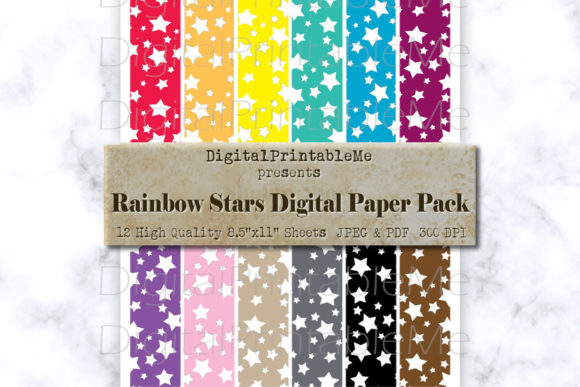
- Digital backgrounds: Subtle, low-contrast star geometry patterns work well as website backdrops or social media templates, adding texture without distraction.
- Data visualization: Use star polygons as the base for radar charts or network diagrams, where each ray represents a variable.
Adapting Star Geometry for Your Goals
Different creators will want to emphasize different aspects of these patterns. A graphic designer might focus on crisp, scalable vectors for print. A hobbyist making greeting cards may prefer hand-drawn variations with imperfect lines. A marketer could use star patterns to frame key messages or create infographic elements.
The key is to match the pattern’s complexity to your audience and platform. For a professional presentation, keep the pattern clean and one color. For a creative poster, layer two star sizes with contrasting hues.
For Entrepreneurs and Small Business Owners
Star geometry patterns can give your brand a distinctive, memorable identity. A logo based on a five-pointed star is common, but a seven-pointed star or an interlocking star pair stands out. Use the pattern in packaging, business cards, and social media headers to create a cohesive look. Start with a simple star outline, then add detail like dashed lines or concentric outlines to make it unique.
For Educators and Hobbyists
Teach geometric concepts through hands-on star construction. People can learn about angles, symmetry, and polygrams by drawing stars on paper or using digital tools. For hobby projects, try making star geometry patterns with string art, laser cutting, or even knitting. The repeating angles make them ideal for grid-based crafts.
For Bloggers and Content Creators
Use star geometry patterns as visual anchors in your articles or videos. A star-shaped callout box can highlight key points. In video thumbnails, a bold star pattern draws the eye. For blog headers, a semi-transparent star pattern behind your title adds depth without overwhelming the text.
Practical Approaches to Creating Star Geometry Patterns
Whether you work by hand or with software, a few principles will help you keep results organized and effective. Start by deciding on the star’s base polygon—triangles, squares, pentagons, hexagons, or octagons all yield different star shapes. Then, determine the spacing between points and the lines connecting them.
Tools and Methods
- Vector software: Adobe Illustrator or Inkscape allow you to create precise star polygons using the polygon tool, then rotate and duplicate them around a center point to build a pattern.
- Geometry apps: GeoGebra or Desmos let you explore star geometry mathematically, perfect for educators.
- Hand drawing: Use a compass, ruler, and protractor. Draw a circle, mark equally spaced points, and connect them in a skip sequence (e.g., connect every second point to make a five-pointed star).
- Online generators: Tools like Patterncooler or Repper can quickly produce repeating star tessellations.
When designing a pattern, keep the grid consistent. A simple grid of squares or hexagons makes tiling star shapes straightforward. For a more organic feel, vary the size of stars but maintain the same internal angle relationships.
Balancing Complexity and Clarity
It is easy to get carried away with intricate lines. Aim for the threshold where the pattern is interesting but still readable from a distance. Test your pattern at small and large scales. A star pattern that looks great on a poster might become a muddy mess on a business card. Adjust line weights and spacing accordingly. For digital screens, ensure the pattern works in both light and dark mode by using a neutral tone.
Examples to Inspire Your Next Project
Let’s look at three realistic scenarios where star geometry patterns make a difference.
Example 1: A coffee shop brand identity. The owner wants a logo that feels warm yet modern. Using a six-pointed star built from overlapping triangles, the designer creates a central emblem. The same star pattern, in a lighter tint, becomes the wallpaper pattern on the shop’s website and packaging. The result feels cohesive and memorable.
Example 2: An online course on sacred geometry. The instructor uses a series of eight-pointed star diagrams to explain historical architecture. Each lesson features a different star polygon, helping students see how the same geometry appears across cultures. The patterns also serve as printable coloring sheets for learners.
Example 3: A freelancer’s portfolio website. The designer sets a subtle hexagram pattern as the background, with the color matching the brand’s accent. The pattern is scaled so large that only a few segments are visible at once, creating texture without distracting from the portfolio thumbnails. The star geometry hints at the designer’s precision-oriented style.
Keeping Your Work Original and Audience-Friendly
Star geometry patterns are everywhere, but you can make them your own by changing the interpretation. Instead of a solid star, use dashed, dotted, or gradient lines. Combine stars with circles or squares to create hybrid patterns. Add a color gradient that moves from center to edge. Or break the symmetry slightly—offset one ray to introduce tension and uniqueness.
For audience-friendliness, consider the emotional tone. Sharp, pointed stars feel energetic and cutting-edge. Rounded star shapes feel softer and more approachable. The same geometry can be tailored by adjusting corner radius or adding organic flourishes.
Finally, always test your pattern on the intended medium. A pattern that looks crisp on screen may lose detail in print or embroidery. If you are using the pattern for a product label, print a sample at full size and check readability. For web use, reduce file size by using SVG paths or small repeating tiles.
Beyond Decoration: Pattern as Structure
Star geometry patterns are not just decorative; they can organize information. In infographics, a star shape can group five related points. In UI design, a star grid can serve as a menu layout. For event planning, a star-shaped seating arrangement fosters conversation. Let the geometry guide not just the look but the function of your project.
When you treat star geometry patterns as a flexible toolkit rather than a fixed style, you open up countless ways to apply them. The same eight-pointed star that appears in a medieval mosque can become the foundation for a modern brand or a classroom activity. That versatility is what makes star geometry patterns a timeless resource for creators.