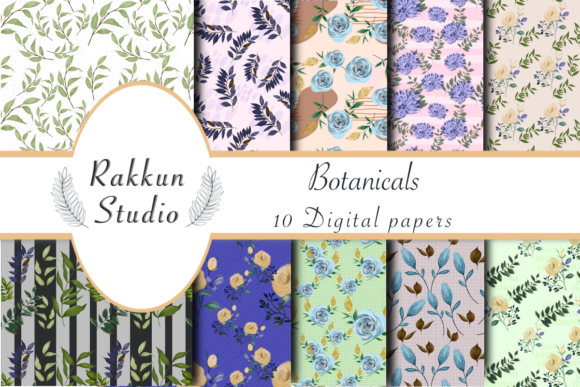
Botanical Seamless Patterns: A Practical Guide to Nature-Inspired Design
If you have ever struggled to find a background texture that feels both professional and inviting, or if you have spent hours trying to create a cohesive look for a website, packaging line, or social media feed, you already understand the value of a reliable design foundation. Botanical seamless patterns offer exactly that kind of foundation — a repeatable, nature-inspired motif that brings warmth, consistency, and visual interest to almost any project. Unlike generic textures or overly complex illustrations, these patterns strike a balance between organic beauty and practical usability.
What Are Botanical Seamless Patterns and Why Do They Matter?
At their core, botanical seamless patterns are repeating designs that feature plant-based elements — leaves, vines, flowers, branches, or herb motifs — arranged so that the pattern can be tiled infinitely without visible seams. This technical characteristic makes them invaluable for anyone who needs scalable, predictable visuals across surfaces of any size. Whether you are designing for a digital interface or a physical product, the ability to repeat a pattern without interruption saves time and ensures a polished result.
The appeal of botanical seamless patterns goes beyond mere aesthetics. Nature-based imagery has been shown to reduce stress and increase feelings of calm, which is why these patterns are so popular in spaces meant to soothe or welcome. For a business or brand, using botanical motifs can signal sustainability, growth, and a connection to the natural world — values that many consumers actively seek today.
Common Challenges That Botanical Seamless Patterns Address
Many professionals and hobbyists encounter a set of recurring frustrations when working with visual content. Understanding these pain points helps clarify exactly how botanical seamless patterns can be a solution.
- Inconsistency across platforms or products. A pattern that looks great on a screen may appear disjointed on a large banner or a fabric roll. Seamless patterns eliminate this risk by design.
- Time spent creating custom backgrounds. Building a repeatable pattern from scratch requires technical skill and patience. Pre-made botanical seamless patterns offer a shortcut without sacrificing quality.
- Visual fatigue from overly busy or generic designs. Many stock textures feel artificial or overwhelming. Botanical elements, when arranged thoughtfully, provide complexity without clutter.
- Difficulty matching brand identity with nature themes. Not every pattern works with every brand. Botanical seamless patterns come in enough variety — from minimalist line art to lush watercolor styles — to fit different tones and industries.
How Botanical Seamless Patterns Help Solve These Problems
The solution begins with the technical reliability of the pattern itself. A well-made botanical seamless pattern has been tested for continuity, meaning you can apply it to a website header, a notebook cover, or an entire wall mural without worrying about awkward breaks. This reliability translates into professional confidence, especially when you are presenting work to clients or customers.
Beyond the technical aspect, botanical seamless patterns offer emotional and psychological benefits. If you are creating a brand for a wellness product, a nursery, an organic food line, or a lifestyle blog, the right pattern can communicate your message without a single written word. The use of leaves, blossoms, or herbs evokes freshness, growth, and care — qualities that resonate deeply with audiences seeking authenticity.
For those who work in fast-paced environments, time savings are a major advantage. Instead of spending hours aligning tiles or adjusting color palettes, you can select a botanical seamless pattern that already aligns with your vision. Many resources offer patterns in multiple colorways, giving you the flexibility to adapt without starting over.
Practical Applications Across Different User Types
Botanical seamless patterns are not limited to one kind of project or profession. Different users will find different ways to make these patterns work for their specific goals. Here is how several common profiles might approach the topic:
Graphic and Web Designers
For designers, the primary need is versatility. A vector-based botanical seamless pattern can be scaled infinitely without losing resolution, making it suitable for everything from tiny icons to full-screen backgrounds. Designers often look for patterns with layered elements — a main motif paired with subtle secondary shapes — because this creates depth and makes the final design feel more dynamic. If you are a designer, consider building a library of patterns in neutral tones for client projects and brighter versions for more playful brands.
Small Business Owners and Entrepreneurs
If you run a small business, you might not have a dedicated design team. Botanical seamless patterns give you a professional look without requiring advanced software skills. Use them on your website background, product packaging, or even as a watermark on social media images. The key is to choose a pattern that complements your logo and color scheme. A rule of thumb: if your brand uses muted or earth tones, a delicate fern or leaf pattern will enhance rather than compete with your existing visuals.
Surface Pattern Designers and Crafters
For those involved in textile design, stationery, or home decor, botanical seamless patterns are a core tool. You may need patterns for fabric rolls, wrapping paper, or wallpaper. In this context, the scale of the pattern becomes crucial. A large-scale botanical motif works well on tote bags and duvets, while a smaller, denser pattern suits notebooks and gift wrap. If you are a crafter, look for patterns with clearly defined color separations so that printing or screen printing yields clean results.
Content Creators and Bloggers
If you produce online content, visual consistency helps build brand recognition. Botanical seamless patterns can serve as a backdrop for video thumbnails, quote graphics, or email headers. They add a layer of sophistication that plain colors often lack. For bloggers in niches like gardening, wellness, or interior design, using these patterns reinforces your area of expertise and makes your content feel cohesive.
Examples and Recommendations for Implementation
To get the most out of botanical seamless patterns, consider these practical guidelines:
- Match the pattern style to your medium. Detailed watercolor patterns are perfect for digital backgrounds but may lose clarity in small print. Simple line-art patterns work well for embroidery, engraving, or monochrome applications.
- Use color to set the mood. Soft greens and ivories convey calm and organic vibes. Dark greens with gold accents suggest luxury and tradition. Bright botanical patterns with pink or yellow flowers feel youthful and energetic.
- Layer patterns for richer designs. You can combine a botanical seamless pattern with a subtle geometric overlay or a solid texture to create a unique composite. This technique is common in packaging design where you want depth without busyness.
- Test the pattern at different scales. A motif that looks perfect at 100% might feel overwhelming at 400%. Many design tools let you preview scaling, so take advantage of that before finalizing.
- Consider the file format. For digital use, PNG files with transparent backgrounds are ideal. For print, look for high-resolution JPEG or vector formats like AI or EPS. Ensure the pattern resolution is suitable for your output size.
One specific example: a small skincare brand might choose a botanical seamless pattern featuring lavender sprigs for its product labels. The pattern reinforces the natural ingredients in the products, creates visual continuity across the product line, and helps the brand stand out on crowded store shelves. By selecting a pattern with a subtle repeat, the brand avoids overwhelming the label while still making a strong visual impression.
Useful Considerations Before You Choose
Not every botanical seamless pattern will work for every purpose. Here are some factors to weigh before making your selection:
- Licensing and usage rights. If you are using a pattern for commercial purposes, confirm that the license covers your intended use — whether for print-on-demand products, digital downloads, or large-scale manufacturing.
- Pattern complexity vs. readability. A very dense pattern may interfere with text overlay on a website or packaging. Test legibility by placing sample text or a logo on top of the pattern.
- Cultural and seasonal relevance. Some botanical motifs carry specific meanings in different cultures, and certain flowers are associated with particular seasons. Choose patterns that align with your message and the time of year you are promoting.
- Consistency across media. If you plan to use the same pattern in print and online, check how colors shift between RGB and CMYK. A pattern that looks vibrant on screen may appear muted in print unless you adjust the palette.
Different Approaches for Different Goals
How you work with botanical seamless patterns will depend on your objectives. Someone focused on branding might treat the pattern as a secondary element that frames and supports the logo. Another user, such as an event planner, might use the pattern as the primary visual for invitations, signage, and table linens, creating a fully immersive experience.
For those who enjoy customization, many botanical seamless patterns can be recolored or modified. If you purchase a pattern with layered vector files, you can isolate individual leaves or flowers and rearrange them, resize them, or change their colors. This approach is especially valuable for designers who want a unique look while saving time.
On the other hand, if you prefer a ready-to-use solution, pre-colored and pre-tested patterns are widely available in marketplaces. These allow you to focus on other aspects of your project while still achieving a polished, nature-inspired appearance.
Bringing It All Together: Implementation for Real Results
The true value of botanical seamless patterns lies in their ability to solve real design problems efficiently. Whether you are creating a brand identity, designing a product line, or building a content library, these patterns offer a blend of beauty and practicality that is hard to match with custom artwork alone. By choosing the right style, scale, and color palette, you can elevate your work without adding unnecessary complexity or cost.
Start by identifying the primary use case — is this pattern for a website background, a fabric print, or a series of social media templates? Then evaluate your audience and brand personality. A modern wellness brand will likely lean toward clean, minimal botanical patterns, while a children's product line may favor whimsical, brightly colored flowers and leaves. Once you have those parameters, explore patterns that fit the brief, paying attention to seamlessness, resolution, and file format.
Remember that botanical seamless patterns are also effective in combination with other design elements. Use them as a subtle backdrop behind typography, as a border accent, or as a fill for icons and shapes. The more you experiment, the more you will discover how these patterns can enhance your projects in ways you might not have considered initially.
Ultimately, the goal is to make your work more consistent, more visually appealing, and more aligned with the natural world that your audience already loves. By integrating botanical seamless patterns thoughtfully, you give your projects a timeless quality that stands out in a digital landscape often dominated by flat colors and generic textures.