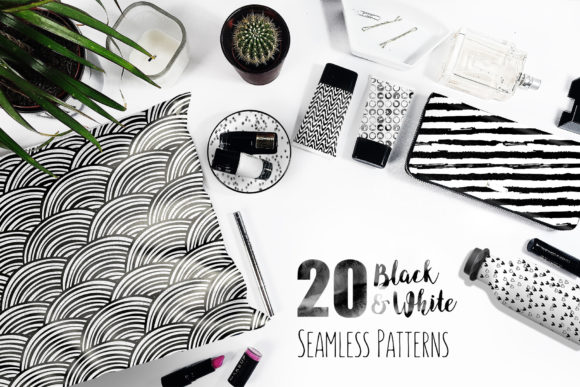
20 Black and White Seamless Patterns for Creative Projects
If you have ever spent hours searching for the right background texture or repeating pattern, you know how quickly a small design task can turn into a frustrating hunt. Black and white seamless patterns offer a clean, timeless solution that works across print, web, and product design. A curated set of twenty such patterns gives you enough variety to handle different projects without overwhelming your decision process. Whether you are a graphic designer, a blogger, a small business owner, or a hobbyist, these patterns can save time, maintain visual consistency, and elevate your work.
What Are Seamless Patterns and Why Use Black and White?
A seamless pattern is a repeating design that tiles perfectly across any surface without visible edges. When the pattern is in black and white, it relies solely on contrast, shape, and texture—no color distractions. This makes it highly adaptable. You can overlay it on colored backgrounds, use it as a subtle texture, or let it stand alone as a bold graphic element. Black and white also carries a classic, professional feel that works well for minimalist branding, editorial layouts, and printable resources.
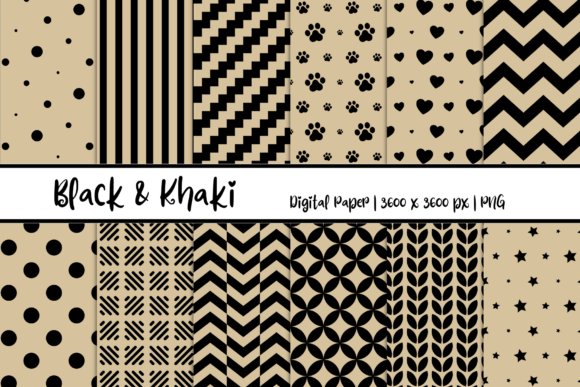
The set of twenty patterns typically includes a range of styles: geometric grids, organic dots, herringbone, chevron, crosshatch, floral repeats, abstract swirls, and more. Having twenty options means you can switch between moods—from playful and dense to airy and elegant—without needing multiple purchases or downloads.
Practical Benefits for Daily Creative Work
When you work with clients or produce content regularly, every minute counts. A well-organized collection of seamless patterns helps you skip the search step and focus on composition. Instead of building a pattern from scratch each time, you apply one that already tiles correctly. This is especially valuable for:
- Social media graphics – Use a subtle dot pattern behind quotes or announcements to add depth without taking attention away from text.
- Website backgrounds – A light crosshatch or micro-geometric pattern can replace a plain solid color, making the page feel more designed while keeping loading times low.
- Printable planners and worksheets – Educators and freelancers often need clean, repeatable backgrounds for PDFs. Black and white patterns print cleanly and work with black-and-white printers.
- Product packaging and labels – A monochrome pattern can become a signature brand element when used consistently across boxes, bags, or stickers.
Because the patterns are seamless, you avoid the awkward seams that sometimes appear when tiling a generic image. This saves post-production cleanup and ensures professional results even when you are working quickly.
Supporting Creativity Without Overwhelm
Having twenty patterns is a sweet spot. Fewer than ten might not cover enough visual variety, while a hundred can lead to choice paralysis. Twenty gives you enough to experiment with different textures per project while still being manageable. You can quickly preview a pattern in your design software, adjust its scale or rotation, and see how it interacts with your content.
For example, if you are designing a presentation slide deck, you might use a tight herringbone for the title slide to convey structure, and a softer stipple pattern for the content slides to add warmth. Having both options in the same monochrome family keeps the deck cohesive. You can also combine two patterns on the same page—one as a large background and one as an accent stripe—without clashing because black and white unifies them.
Entrepreneurs and marketers often need to create multiple assets for a campaign: email headers, landing page sections, social posts, and physical flyers. A single set of patterns can tie all these pieces together visually. This consistency builds brand recognition and saves design iteration time.
Who Benefits Most and Why
Graphic and web designers – You likely already have a library of textures, but black and white seamless patterns are a fundamental resource. They work as placeholders during wireframing and as final textures in production. They also layer well with gradients and photos.
Bloggers and content creators – A distinctive pattern can become part of your blog’s visual identity. Use it behind your header, in your sidebar dividers, or as a watermark on images. Because the patterns are seamless, they scale correctly across different screen sizes.
Small business owners – If you produce your own marketing materials, you need tools that are easy to apply. Seamless patterns come as PNGs, SVGs, or EPS files depending on the set. You can drop them into Canva, Adobe Illustrator, or even Microsoft PowerPoint and have them work immediately.
Educators and homeschoolers – Create your own flashcards, name tags, reward charts, and worksheet borders without relying on licensed clipart. Black and white patterns are printer-friendly and can be used on colored paper for added effect.
Freelancers and hobbyists – Whether you design fabric, make digital scrapbook kits, or create printable art, these patterns give you a base to customize. You can add your own text, recolor the pattern using software (if you want color variations), or combine them with other elements.
Practical Considerations When Using Patterns
Not all seamless pattern sets are created equal. When choosing or using a set of twenty black and white patterns, keep these factors in mind:
- Resolution and file format – For print, look for patterns at 300 DPI or higher. For web, PNG with transparency is often easiest to work with. SVG patterns are resolution-independent and ideal for scalable design.
- Scale and repeat size – Some patterns are designed to repeat every 500 pixels, others every 2000 pixels. Know the size of your canvas. A very large repeat on a small business card might look like a single big shape, whereas a tiny repeat on a billboard might become an indistinct texture. You may need to scale the pattern within your design software.
- Style range – A good set of twenty should include both dense and sparse patterns, organic and geometric. This way you can match the pattern weight to your content. Avoid sets where all patterns look similar—you want real variety in line weight, density, and motif.
- License terms – Many commercial pattern sets allow use in unlimited projects, but some restrict resale of the pattern itself. If you intend to use the patterns in products you sell (like printables or merchandise), check that the license covers commercial use.
If you are on a tight budget, there are also free collections of seamless patterns available online, but they often have fewer options and lower resolution. For consistent quality and variety, investing in a premium set of twenty can be worthwhile, especially if you produce work regularly.
Realistic Limitations and Fit
Black and white seamless patterns are powerful, but they are not a universal solution. If your project requires full-color thematic textures—like watercolor, photographic, or branded color gradients—monochrome patterns may feel too limited. In those cases, you might use the black and white pattern as an overlay on top of a color gradient, or you might need a separate set of color patterns.
Also, seamless patterns by nature repeat. For a design that requires a unique, non-repeating background (like a single large illustration), a tileable pattern may not be the right choice. Similarly, if you want a very organic, irregular texture, some patterns can feel too geometric. It always helps to preview your pattern on your actual canvas before committing.
Another consideration is that patterns look different at different scales. A pattern that seems delicate at small size may become too bold when enlarged. The twenty patterns give you a range, but you may still need to adjust size or combine with other elements to achieve the perfect look.
Making Patterns Work for Your Goals
The most effective way to use these patterns is to think of them as a design element, not a complete solution. They add texture, depth, and visual interest, but they work best when balanced with white space and typography. For example, a strong black chevron pattern behind a white text box creates contrast and frames the content. Alternatively, a faint dotted pattern used as a subtle page background can make a report feel clean and thoughtful without distracting from the data.
If you are a freelancer building a brand kit for yourself, you can assign one pattern to your website background, another to your invoice template, and a third to your social media highlight covers. This creates a cohesive look with minimal effort. For marketers, using the same pattern across email newsletters and blog banners helps subscribers instantly recognize your content.
Educators can use patterns to create themed learning materials. A grid pattern works for graph paper, a starburst pattern for certificates, and a stripe pattern for dividing sections of a study guide. Because the patterns are black and white, they photocopy well and do not drain printer ink.
Final Thoughts on Choosing a Set
A well-curated set of 20 black and white seamless patterns is a practical resource that can streamline your workflow and strengthen your visual communication. The key is to select patterns that genuinely suit your typical projects—if you work mostly with geometric layouts, a set heavy on florals may not serve you. Look for sample images or previews that show the pattern at multiple scales so you can judge its repeat size and density.
Once you have a good set, keep it organized in a folder on your creative cloud or local drive. Label each pattern with its style name (e.g., “fine crosshatch,” “bold zigzag”) so you can find it quickly. Over time, you will develop a sense of which patterns work best for backgrounds, borders, accents, and fill areas. That knowledge alone can save you hours of redesign and experimentation.
Whether you are launching a new brand, creating classroom materials, or simply adding polish to your social media posts, twenty black and white seamless patterns offer a versatile foundation. Their simplicity is their strength—they adapt, layer, and repeat without fuss, letting you focus on the message and the audience rather than the texture itself.