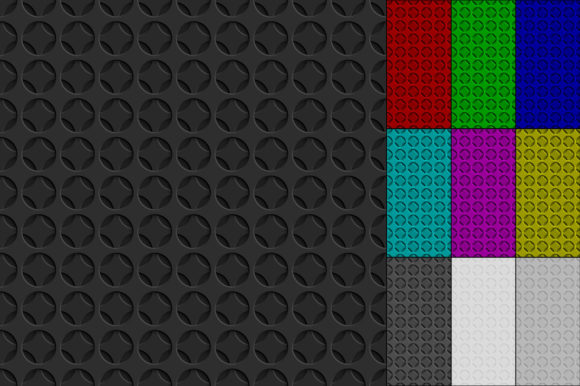
Seamless Patterns with Holes: Design, Function, and Real-World Applications
When you encounter the term seamless patterns with holes, your mind might immediately jump to textiles, perforated metal sheets, or even digital tileable backgrounds. Yet the concept is far more pervasive and consequential than a first glance suggests. From architectural facades that regulate light and air to advanced filtration systems, from fashion textiles that breathe to decorative digital assets that repeat without visible boundaries, the intersection of repetition and void is a design principle that shapes both aesthetics and utility. Understanding how these patterns are constructed, why they matter, and where they excel opens up a world of creative and functional possibilities.
What Defines a Seamless Pattern with Holes?
At its core, a seamless pattern is any repeating motif that tiles infinitely across a surface without detectable seams, edges, or interruptions. When you introduce holes—deliberate voids, perforations, cutouts, or negative spaces—into that repeating structure, you create a hybrid: a design that balances density with transparency, structure with airiness. The holes can be uniform circles, geometric slits, organic irregular shapes, or even complex algorithmic voids. The key requirement is that the repeating module (the tile) must align perfectly on all edges, so that the holes continue uninterrupted across repetitions. This technical constraint makes the creation of seamless patterns with holes both an art and a science, demanding precision in digital tools or manufacturing processes.
Characteristics That Matter
Several attributes define how these patterns perform and how they are perceived. First is the repeat unit size. A small tile creates a dense, busy visual texture, while a larger tile gives the pattern room to breathe and emphasizes the holes as distinct features. Second is the hole shape and orientation. Circular holes feel neutral and organic; square or diamond holes appear more industrial; asymmetrical voids can guide the eye or create directional flow. Third is the ratio of void to material. High void ratios produce lighter, more transparent patterns that filter light or air efficiently, but may compromise structural integrity. Lower ratios yield subtler textural effects with greater strength. Finally, the edge behavior in digital contexts determines whether the pattern truly repeats without visual disruption—a critical factor for web backgrounds, fabric printing, or tile design.
Why These Patterns Are Everywhere
The appeal of seamless patterns with holes lies in their ability to serve multiple masters simultaneously. They can be decorative yet functional, repetitive yet dynamic, structured yet organic. In architecture, perforated metal panels with seamless hole patterns allow buildings to control solar gain while maintaining outward visibility. The holes reduce heat load, create intriguing light play inside, and give the facade a distinctive texture. In fashion and upholstery, fabrics with laser-cut holes arranged in seamless repeats provide ventilation and a modern aesthetic without fraying edges. In graphic design, digital patterns with transparent voids create layered backgrounds that allow underlying content to peek through, adding depth without clutter.
Consider the humble speaker grille. Its perforated metal or plastic surface uses a repeating hole pattern that must align perfectly across the entire panel. If the pattern were not seamless, the repeating modules would clash, creating visible lines that detract from the product's premium feel. The same principle applies to filtration media, where the size and spacing of holes determine what particles pass through. Here, seamless repetition ensures uniform performance across the entire filter surface—no weak spots, no clogs concentrated in one area.
Architecture and Interior Design
Modern architecture relies heavily on perforated materials for cladding, sunscreens, railings, and room dividers. A seamless pattern with holes on a metal panel can reduce wind load, provide acoustic damping, and create a signature visual identity for a building. Inside, laser-cut wooden screens with repeating geometric voids partition spaces while maintaining an open feel. The patterns must tile perfectly across large panels, so fabricators often use CNC cutting guided by digital tile files. The result is a cohesive surface that feels intentional rather than patched together.
Textiles and Fashion
In the apparel industry, seamless hole patterns appear in athletic wear for breathability, in decorative trims, and in high-end garments where laser cutting creates intricate lace-like effects. The absence of seams is critical here: a pattern that repeats without breaks on a roll of fabric allows for efficient cutting and minimal waste. Designers use CAD software to create repeating hole motifs that align with garment panels, ensuring that the ventilation zones or decorative cutouts fall exactly where intended. For seamless patterns with holes in textiles, the edge alignment of the repeat must be flawless to avoid visible jumps when fabric pieces are joined.
Digital Design and User Interfaces
Web and app designers use tiling background images with transparent holes to create layered interfaces. A subtle geometric pattern with small voids can add texture to a hero section without distracting from content. Because these patterns are seamless, they load quickly (a single tile repeated) and adapt to any screen size. SVG-based patterns with holes are especially popular because they scale infinitely and remain crisp. The holes in digital patterns often serve a secondary purpose: they can reveal a gradient, image, or video underneath, creating a rich visual experience with minimal data.
Industrial and Functional Products
Beyond aesthetics, seamless patterns with holes are engineered into acoustic panels to absorb sound, into light diffusers to soften illumination, and into ventilation grilles for electronics. In each case, the uniformity of the hole distribution directly affects performance. A sound panel with irregular hole spacing might have dead zones; a diffuser with non-seamless patterns could create visible banding. Manufacturers must ensure that the tooling or cutting path produces a truly seamless repeat across the entire product surface.
Practical Considerations for Creators
Whether you are designing these patterns for physical production or digital use, a few core principles will elevate your results. First, start with the tile. In software like Adobe Illustrator, Photoshop, or specialized pattern tools like Patternify or Tiled.xyz, set your tile dimensions carefully. A common approach is to use a square tile and ensure that elements crossing the right edge continue from the left, and those crossing the bottom continue from the top. For hole patterns, this means the voids must be mirrored or offset precisely so that no half-hole lands on an edge.
Second, test the repeat. Even experienced designers occasionally create tiles that look seamless at first but reveal subtle gaps when tiled in a grid. Use preview modes that show the pattern repeated four times (2x2) to catch edge mismatches. For physical fabrication, the tolerance becomes even tighter: a difference of 0.1 mm in hole placement can create a visible seam across a large panel.
Third, consider the material and process. Laser cutting, waterjet cutting, stamping, and weaving each impose different constraints on hole size, spacing, and shape. A pattern that works beautifully in a digital render may be impossible to cut without deformation if the holes are too close together. Always validate your design against the capabilities of the production method.
Fourth, think about scale. A pattern that looks delicate on a small tile may become overwhelming when blown up to building scale. Conversely, a pattern designed for a large facade may lose its character when shrunk for a furniture detail. Creating multiple variants at different scales, each with seamless repeats, is a smart practice for comprehensive projects.
Observations on Trends and Innovation
The world of seamless patterns with holes is evolving rapidly. Parametric design tools allow designers to generate hole patterns algorithmically, where the size, shape, and density of holes vary across the surface while still maintaining seamless tiling. This breaks the traditional mold of uniform repeats, creating gradients of porosity that respond to functional needs—more holes where ventilation is needed, fewer where strength is critical. Architecture firms like Foster + Partners and SANAA have used such approaches to create facades that are simultaneously structural, environmental, and artistic.
Another exciting trend is the use of biomimicry. Patterns inspired by lotus leaves, honeycombs, or fish scales incorporate holes that serve specific biological functions: self-cleaning, water channeling, or light management. Translating these natural strategies into seamless manufacturing patterns offers sustainable solutions for building skins, packaging, and even medical implants. The seamless quality matters here because nature rarely produces visible seams—biomimetic patterns feel organic precisely because they repeat without abrupt edges.
In the digital realm, responsive seamless patterns are gaining traction. These are patterns where the holes change size or orientation based on user interaction, screen size, or data input. For example, a dashboard background might use a pattern with holes that enlarge when the interface is in night mode, letting more of the dark background show through. The seamless repeat ensures smooth transitions without visual stutter.
Getting Started with Your Own Patterns
If you wish to create seamless patterns with holes, begin by deciding on the tool and format. For digital use, vector-based design offers the most flexibility. Create a tile, place your hole shapes (circles, polygons, custom curves), and use the offset or transform tools to ensure edge continuity. Then test your tile in a repeating grid. For physical products, consult with fabricators early. They can provide guidelines for minimum hole size, material thickness ratios, and edge distances. Many fabricators accept DXF or AI files directly, so your digital seamless pattern can translate directly to cutting instructions.
Experiment with hole arrangements. A regular grid of holes is simple and effective, but staggering the rows (like a brick pattern) can increase strength while maintaining airflow. Varying hole sizes within the same tile—as long as the edge crossing is handled correctly—creates a richer visual texture. Add rotation to some holes for a dynamic feel. The possibilities are vast, and the only hard rule is that the pattern must tile flawlessly.
A Note on Perception
People perceive patterns with holes differently depending on context. In textiles, they signal breathability and modernity. In architecture, they can suggest transparency and innovation. In digital interfaces, they imply depth and layering. The cultural and functional associations of holes—openness, permeability, lightness—make these patterns psychologically resonant. A well-executed seamless pattern with holes can make a product feel more approachable, a space more inviting, or a brand more forward-thinking.
Looking Ahead
As manufacturing becomes more precise and digital tools more accessible, the bar for seamless patterns continues to rise. What once required industrial expertise can now be prototyped on a desktop laser cutter or woven on a digital loom. The demand for customized, high-quality repeating hole patterns is growing across sectors. Whether you are designing a new line of perforated furniture, a breathable sportswear fabric, or a dynamic website background, the principles of seamless repetition and intentional void will serve as your foundation. Understanding how to balance form and function, how to test and refine, and how to adapt patterns to different scales and materials will set your work apart. In a world saturated with visual noise, a thoughtfully constructed pattern with holes can be both a statement and a solution.