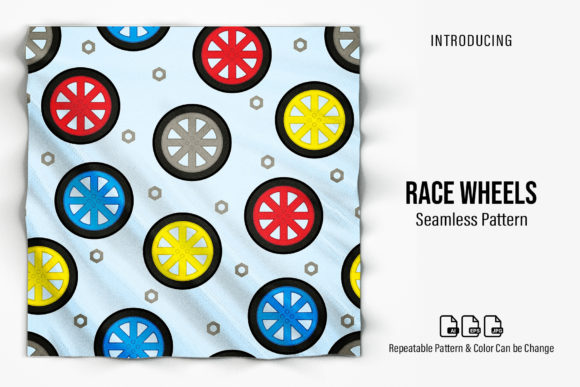
Race Wheels Patterns: Design & Inspiration
Race wheels patterns are more than just a functional necessity—they are a source of visual rhythm, structural logic, and creative possibility. Whether you’re a designer looking for fresh motifs, a marketer seeking a strong visual anchor, or a hobbyist building something with your hands, these patterns offer a rich playground. The interplay of spokes, rims, hubs, and tire textures creates a language of symmetry, tension, and movement that can be translated into almost any medium.
What Makes Race Wheels Patterns Unique
At their core, race wheels patterns are defined by geometry optimized for speed, weight reduction, and heat dissipation. But that engineering precision also produces striking visual results. The radial symmetry, the repeating spokes (Y‑shaped, split, multi‑spoke), the negative space around the hub, and the subtle curves all work together to create a sense of forward motion even when standing still. This dual personality—functional and aesthetic—makes them a compelling source of inspiration for creative professionals and entrepreneurs alike.
For a graphic designer, a race wheel’s spoke layout can become a logo’s inner structure. For a product designer, the repeating pattern can influence the form of a furniture leg, a lamp base, or a packaging insert. For a content creator, the visual energy of a wheel pattern can set the tone for a brand’s identity—fast, reliable, and precise.
Visual Identity and Branding
Marketers and brand strategists often look for symbols that communicate performance and trust. Race wheels patterns naturally evoke precision engineering and motion. A simplified spoke pattern can serve as a brand mark for an automotive accessory company, a cycling apparel line, or even a tech startup that wants to associate itself with speed and reliability. By abstracting the pattern (removing the tire, focusing on the hub‑to‑rim ratio), you get a clean, scalable icon that works on app icons, business cards, and billboards.
Example: A small business owner launching a line of performance bike components could use a five‑spoke wheel silhouette as their primary logo. Paired with a bold sans‑serif typeface, it signals both heritage and innovation. The pattern itself doesn’t need to be literal—it can be a radial grid that hints at the wheel without being a literal drawing.
Digital Design and UI/UX
Web and app designers can borrow the structural logic of race wheels patterns for navigation layouts, icon sets, or background textures. A radial menu (inspired by spoke orientation) can feel dynamic and intuitive for users who appreciate control and speed. The concentric circles of a wheel can also inform micro‑interactions, like loading animations or progress indicators that pulse outward from a hub.
For a creator making a dashboard for a racing simulator or a fitness app, using subtle wheel‑inspired geometry in the interface adds a layer of theme without overwhelming the user. The key is restraint: take the rhythm, not the entire image.
Product Design and Prototyping
Entrepreneurs and hobbyists working on physical products can adapt wheel patterns for ergonomics and aesthetics. The open spaces between spokes reduce weight and allow airflow—principles that apply to chair backs, shelving units, or lighting fixtures. A table base that echoes a six‑spoke racing wheel pattern not only looks striking but also offers structural stability with less material.
3D printing and CNC machining make it feasible to experiment with these patterns at home. A freelancer designing custom jewelry could create earrings or pendants that play with radial symmetry inspired by a magnesium racing rim. The pattern becomes a signature: recognizable, repeatable, and ownable.
Content Creation and Visual Storytelling
Bloggers, publishers, and video creators can use race wheels patterns as visual metaphors in their content. A video intro that transitions from a spinning wheel into a grid of content tiles can hook an audience expecting high energy. For an article about efficiency or innovation, a wheel pattern image (or abstracted version) reinforces the message without needing extra text.
Photographers and illustrators can also find inspiration in the interplay of light and shadow across a wheel’s surface. The contrasting curves and straight spokes create natural leading lines. A simple close‑up of a carbon‑fiber wheel can become a compelling hero image for a blog post or social media campaign.
Adapting Patterns for Different Goals and Audiences
How you use race wheels patterns depends heavily on your audience. A tech‑savvy audience (entrepreneurs, developers) will appreciate the engineering logic behind the pattern—explain the weight‑saving and aerodynamic benefits in your design rationale. A design‑focused audience (creative directors, hobbyists) will respond more to the visual harmony and the way negative spaces create balance. Tailor your language and emphasis accordingly.
For a B2B context (e.g., selling industrial equipment), a subtle spoke pattern in your branding can imply durability and performance without being flashy. For a consumer brand targeting athletes or enthusiasts, you can lean into the motion and energy with more explicit wheel imagery.
Practical adaptation tips:
- Scale matters: A pattern that works on a large banner may clutter a small thumbnail. Simplify by using fewer spokes or a solid silhouette.
- Color psychology: Use metallic tones (silver, gunmetal, carbon black) to echo the material of racing wheels, or break away with bold colors (red, electric blue) to emphasize energy.
- Rotation: A static pattern reads as stable; a rotated one suggests motion. Decide which emotion you want to evoke.
- Combination with other elements: Pair wheel patterns with straight lines or grids to contrast organic curves with industrial precision.
Keeping Results Clear, Consistent, and Original
It’s easy to over‑complicate a pattern. The best race wheels patterns are instantly readable—you can count the spokes in a glance. When applying these patterns to your own work, aim for that same clarity. If you’re building a brand system around a wheel motif, define a set of rules: number of spokes, curvature, hub size, and minimum spacing. This ensures consistency across touchpoints without losing identity.
Originality comes from interpretation, not replication. Instead of copying a known wheel design (e.g., a classic BBS mesh or a modern turbine style), extract the underlying structure—radial symmetry, repeated elements, a central focal point—and combine it with your own style. For instance, a wheel pattern made of organic leaves instead of mechanical spokes blends nature with mechanics, creating something fresh for an eco‑brand.
Recommended workflow for designers and hobbyists:
- Research different wheel patterns: multi‑spoke, split‑spoke, mesh, star, turbine, directional. Understand why each was made (aerodynamics, strength, cooling).
- Sketch or vector a simplified version, keeping only the essential lines.
- Test how it looks at various sizes and in both positive and negative space.
- Adjust proportions to fit your specific medium (digital, print, product).
- Apply with a clear purpose—don’t force it if the pattern doesn’t serve the message.
Realistic Examples and Practical Inspiration
Example 1: A freelancer creating a portfolio website for automotive photography uses a subtle 6‑spoke radial pattern as the background of their hero section. The pattern is light gray on white, barely noticeable, but it gives a subconscious sense of motion. Paired with a bold tagline, the site feels fast without being loud.
Example 2: An educator teaching geometry or design principles can use race wheels patterns as a real‑world example of symmetry and tessellation. Students can deconstruct a wheel into its basic shapes (circles, arcs, straight lines) and then create their own variations—a hands‑on lesson that bridges art and engineering.
Example 3: A small business owner printing custom mugs uses a race wheel pattern laser‑etched into the ceramic. The pattern wraps around the mug, aligning the spokes with the handle for a unified look. The result is a product that feels premium and specialized, not generic.
Example 4: A blogger writing about urban mobility uses a tire‑tread pattern combined with a spoke layout as the header image for every article in a series. The consistent visual anchor builds recognition across posts, and readers associate that pattern with the topic of movement and city life.
Staying Audience‑Friendly and Clear
Always ask: does this pattern help my audience understand or feel something? If the answer is no, simplify or replace it. Race wheels patterns are a tool, not a rule. Your goal as a creator, marketer, or entrepreneur is to communicate an idea or emotion—use the pattern only as a means to that end. Overly complex patterns can distract or confuse, especially in interfaces or printed materials meant for quick reading.
Test your pattern with a small audience before rolling it out widely. A simple A/B test of two web page versions—one with a subtle wheel pattern and one without—can reveal whether the visual adds value or noise. Likewise, if you’re designing a physical product, build a prototype and get feedback on the look and feel. Patterns that work beautifully in a sketch may feel too busy in reality.
Final Thoughts on Applying Race Wheels Patterns
Race wheels patterns offer a unique blend of engineering logic and visual elegance. Whether you use them as a direct motif or an abstracted principle, they can add depth, movement, and a sense of purpose to your work. The key is to adapt, not imitate—take the structural DNA and make it your own. With clarity, consistency, and a clear audience focus, these patterns become more than just decoration. They become a part of your message.