Leaf Branches Patterns: Real Uses for Creators, Marketers, and Everyday Designers
You’ve probably seen leaf branches patterns without even noticing them. They show up on greeting cards, blog backgrounds, fabric prints, and product packaging. But if you’re someone who actually makes things—whether that’s a social media post, a physical product, or a client presentation—you’ve likely asked yourself: Is this pattern right for what I’m trying to do? The answer depends on where, when, and why you plan to use it. Let’s walk through the realistic situations where leaf branches patterns earn their keep.
What Leaf Branches Patterns Actually Are
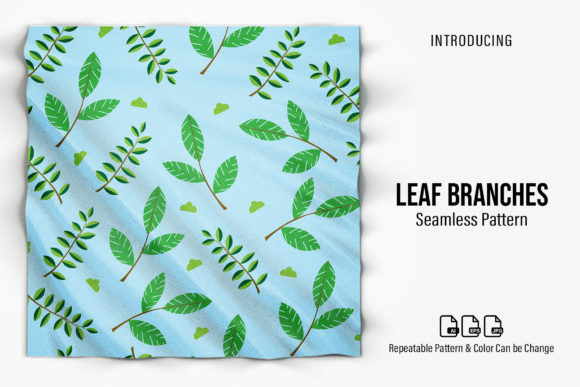
At their simplest, leaf branches patterns are repeating or single motifs built from leaves, stems, twigs, or entire branch silhouettes. They can be minimalist line art, watercolor style, hand-drawn, or vector-based. The “pattern” part means they’re designed to repeat seamlessly or to be placed as a standalone element with consistent visual language. You’ll find them in digital asset libraries, on stock design sites, and bundled with creative software. But knowing the technical definition matters less than knowing when they help your project.
Branding and Visual Identity: When Nature Adds Trust
If you run a small business that sells organic products, handcrafted goods, or outdoor experiences, your brand needs to feel approachable and grounded. Leaf branches patterns work well as subtle background textures on your website header, packaging tape, or invoice templates. For example, a freelance herbalist might use a soft, repeating branch pattern on product labels. It communicates “natural” without shouting. The pattern ties the brand to growth, seasons, and unprocessed materials.
Consider this: a pattern with fine, delicate branches suggests precision and care, while a bold, full-leaf branch pattern feels earthy and robust. Think about your audience. A wellness coach targeting stressed professionals might use a clean, sparse branch motif on social media graphics—something that leaves breathing room. A farmer’s market vendor, on the other hand, could go denser and more rustic. The pattern reinforces the mood without extra words.
Digital Content: Blog Headers, Social Templates, and Video Thumbnails
Bloggers and content creators often struggle to keep visuals fresh without spending hours on design. Leaf branches patterns are a practical shortcut. You can use them as a subtle repeating background for a blog’s sidebar or footer. The visual recognition is instantaneous: visitors see leaves and branches and associate your content with nature, simplicity, or sustainability—depending on the style.
For Instagram or Pinterest pins, a single branch motif layered over a photo can act as a framing element. For an autumn-themed recipe post, you might place a branch pattern running diagonally across the lower third of the pin. It adds seasonal relevance without competing with the food image. The key is restraint. Use the pattern as an accent, not the main stage. That’s where many creators trip up—they overlay patterns so heavily that the text becomes hard to read. Always test contrast.
Video thumbnails for a gardening channel or a meditation series also benefit. A branch pattern behind the title text gives a consistent visual identity across a playlist. Over time, viewers will recognize your style even before they read the title.
Home Staging and Interior Design Mood Boards
Interior designers and home stagers use leaf branches patterns in mood board presentations to communicate biophilic themes. If you’re proposing a room with lots of natural wood, stone, and green tones, a leaf branch pattern in a coordinating color shows the client how nature can flow through textiles. You might use a pattern as a placeholder rug texture or a throw pillow fabric in your digital mockup. It helps the client picture the outcome without buying physical samples first.
Hobbyists redecorating their own spaces can also use these patterns. Download a seamless leaf branch pattern and print it on fabric via a service like Spoonflower. You can make custom curtains, cushion covers, or even wallpaper for a single accent wall. The beauty is that you control the color palette. If your room is all neutrals, choose a pattern that uses those exact tones—soft beige branches against cream leaves. That way it fits instead of screaming “cute but out of place.”
Education and Teaching Materials
Teachers and educators who create worksheets, flashcards, or classroom posters often look for ways to make materials visually engaging without overloading students. Leaf branches patterns can serve as borders or subtle watermarks on nature study pages, science unit planners, or art history handouts. A pattern of simple branch silhouettes along the margin of a botany worksheet is both thematic and non-distracting.
For online course creators, pattern backgrounds on slide decks can reduce eye strain between content-heavy slides. Use a very faint, light-colored leaf branch pattern as the background of your title slides. Then switch to a solid white or black for the detailed slides. The pattern creates a visual break without slowing the lesson. Just make sure your pattern is royalty-free and licensed for commercial use if you’re selling the course.
Small Business Packaging and Labels
Product packaging is one of the highest-impact uses of leaf branches patterns. A well-chosen pattern on a candle jar, soap box, or tea tin can make the product feel curated and high-quality. The pattern becomes part of the unboxing experience. For a soap maker who uses botanical ingredients, a subtle leaf branch pattern on the wrapper echoes the ingredients without needing to list them on the front.
The practical consideration here is repeatability. If your product line has multiple sizes, the pattern must scale neatly. A pattern that looks crisp on a 4-inch wide label might turn muddy on a 1-inch test tube sticker. Always preview at actual size. Also, talk to your printer about registration and color limits. Complex patterns with many fine lines may increase printing costs or bleed requirements. Simpler patterns often reproduce better and keep your unit cost lower.
Wedding and Event Stationery
Leaf branches patterns appear in wedding invitations, programs, and thank-you cards more often than you’d think. But they’re not just for nature-themed weddings. A modern, minimalist branch pattern works for a downtown loft wedding. A lush, jungle-like pattern fits a tropical destination event. The couple’s choice tells guests about the atmosphere before they even open the envelope.
Event planners and stationery designers can use layered patterns: a large, faint branch pattern as the background of the invitation, and then a smaller, darker leaf motif as a decorative corner on the response card. Consistency across the suite makes it look unified, not scattered. Again, check file format requirements—most print shops want vector SVG or high-res PNG with 300 DPI. If your pattern file is low-res, you’ll get blurry prints. Always request a proof to see how the branches scale.
What to Consider Before You Choose a Pattern
Before you download or buy a leaf branches pattern, think about these factors. First, intended use. Is this for a digital screen or a physical print? Screen patterns can be lower resolution, but physical prints need at least 300 DPI at the final size. Many stock assets come in multiple resolutions—choose the one that matches your output.
Second, pattern style consistency. Some pattern packs mix a dozen different leaf styles. If you need a uniform look across a brand, pick a cohesive set. Mixing too many styles can make your materials feel disjointed. For a single project, like one poster, variety is fine. For a whole website, uniformity helps.
Third, color versatility. Patterns are often sold in specific color schemes. If you need a specific brand color, look for patterns that are easy to recolour in software like Illustrator or Canva. Vector formats (SVG, EPS, AI) are easiest to edit. Raster patterns (JPG, PNG) are harder to adjust without artifacts.
Fourth, licensing and attribution. If you’re using patterns for client work or any commercial purpose, read the license. Some free patterns require you to credit the designer, which might not be appropriate on product packaging. Paid patterns usually come with broader commercial rights. Always keep a copy of the license file.
Fifth, scalability. A pattern that looks charming at 3 inches may look messy at 3 feet. Test the pattern at the largest size you’ll need. Seamless patterns are great for backgrounds because they tile without visible seams. Make sure the tile is large enough that you don’t see repetition too quickly.
Final Thoughts on Making Leaf Branches Patterns Work for You
Leaf branches patterns are a tool, not a magic fix. They work best when you match the style, scale, and color to your specific project context. Whether you’re a blogger adding warmth to a newsletter, a small business owner printing labels, or an educator building a nature-themed unit, these patterns can save time and create visual consistency. The trick is to treat them like a supporting actor—present enough to set the mood, quiet enough to let your main content shine. Look at your current projects. Where could a subtle branch pattern tie everything together without adding clutter? That’s your starting point.