Floral Seamless Patterns in Vector Design
Floral seamless patterns have long been a cornerstone of surface design, branding, and digital creativity. When combined with vector design, they become infinitely scalable, endlessly editable, and remarkably versatile. Whether you are a freelance illustrator building a portfolio, a small business owner refreshing your product packaging, or a marketer looking for background textures that won't pixelate, floral seamless patterns in vector format offer a practical and inspiring foundation. The real value lies not just in how they look, but in how they adapt to different workflows, audiences, and creative goals.
What Makes Floral Seamless Patterns a Design Staple
A seamless pattern repeats without visible breaks or seams, creating a continuous visual field. When that pattern is built with vector elements, every flower, leaf, and stem is mathematically defined rather than pixel-based. That means you can scale a single petal up to billboard size or shrink an entire repeat down to a social media icon without any loss of clarity. For creators who work across print and digital, this flexibility saves time and preserves consistency.
Beyond technical advantages, floral motifs bring a natural warmth to design. They evoke growth, seasonality, and organic structure. Unlike abstract geometric repeats, floral seamless patterns carry an inherent narrative of nature and rhythm. This makes them particularly useful for brands and projects that want to feel approachable, handcrafted, or tied to themes like wellness, sustainability, or heritage.
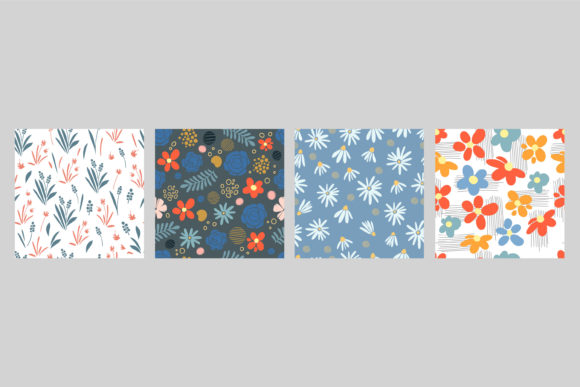
For designers and hobbyists, starting with a floral vector pattern means you can tweak colors, swap individual elements, or adjust scale without redrawing the entire composition. That iterative ease encourages experimentation. You can test a dark background with bright blossoms, or try a monochromatic version for a more subdued effect, all within minutes.
Creative Applications Across Industries
Floral seamless patterns in vector form are not limited to wrapping paper or fabric prints. Their utility stretches across multiple fields, and understanding where they fit can open up new projects for your portfolio or product line.
Branding and Identity
Many small businesses and lifestyle brands use floral patterns as secondary brand elements. A subtle floral repeat on business cards, website headers, or packaging tape can differentiate a brand from competitors who rely solely on logos and solid colors. For example, a skincare line targeting eco-conscious consumers might use a soft botanical repeat on product boxes and social media templates. A vector pattern allows the brand to use the same motif on a tiny lip balm label and a full-size poster without rescaling issues.
Digital Content and Social Media
Marketers, bloggers, and content creators often need backgrounds that feel polished but not distracting. Floral seamless vectors work well as Zoom backgrounds, Instagram story fills, or blog post dividers. Because they are vector-based, you can export them at any resolution and maintain crisp edges even on retina screens. A food blogger might use a subtle floral pattern as a backdrop for recipe cards, while a wedding planner could use a romantic blossom repeat for mood boards and client proposals.
Print on Demand and Merchandise
For entrepreneurs and freelancers selling on print-on-demand platforms, floral seamless patterns are consistently popular. Tote bags, phone cases, notebooks, and mugs with floral repeats sell well across demographics. Vector design makes it easy to create multiple colorways of the same pattern, allowing you to offer variety without starting from scratch each time. A single floral tile can generate a dozen products simply by shifting the palette from pastel to jewel tones or from warm neutrals to cool monochromes.
Styles and Interpretations to Explore
Not all floral seamless patterns need to look like a cottage garden. The range of styles available in vector design means you can match the mood to your audience or project goal.
Botanical Realism and Vintage Charm
Highly detailed floral vectors that mimic botanical illustrations carry a sense of authenticity and depth. These patterns work well for publishers creating book covers, educators developing nature-themed teaching materials, or marketers in the home decor space. The key is to keep the repeat large enough that individual blooms remain readable. A tight repeat can make detailed florals feel busy, so test your tile at different scales before finalizing.
Modern Minimalist Floral Repeats
For a cleaner, more contemporary look, minimalist floral patterns use simplified shapes, generous negative space, and restrained color palettes. These appeal to audiences who favor Scandinavian or mid-century modern aesthetics. A designer creating stationery for a tech startup, for instance, might use a minimalist floral repeat in two or three muted tones to add visual interest without overwhelming the layout. The vector format allows for precise alignment and easy duplication of simple leaf or bud forms.
Abstract and Artistic Variations
Floral motifs can also be stylized into geometric or abstract forms. Petals become triangles, stems become straight lines, and the overall pattern reads as both natural and constructed. This approach is useful for branding that needs to bridge organic and industrial themes, such as a farm-to-table restaurant with a modern interior. Abstract floral vectors also hold up well in large-scale applications like wallpaper murals or exhibition backdrops, where the pattern becomes a statement piece.
Practical Guidance for Working with Floral Seamless Vectors
Whether you are creating your own patterns or licensing them from a marketplace, a few practical considerations will keep your work clear and effective.
First, pay attention to repeat size. A pattern that repeats too frequently can become dizzying, while one that repeats too sparsely may not look seamless at all. Aim for a tile that contains enough visual variety to feel intentional, but not so many elements that the pattern competes with foreground content. For backgrounds supporting text, a smaller-scale repeat with low contrast between elements often works best.
Second, manage color carefully. Vector patterns allow infinite color flexibility, but too many hues can make a pattern appear chaotic. Limit your palette to two to four colors for most applications, and use tints or shades of those colors to add depth. If you are designing for print, remember that some colors may shift between screen and paper. Test your vector pattern in the final medium whenever possible.
Third, think about orientation and flow. Some floral patterns work best with a horizontal or vertical directional flow, while others are more random. A pattern intended for a dress or curtain might benefit from a directional flow that follows the fabric's drape. A pattern for a website background, on the other hand, might need to look consistent regardless of screen size. Vector software lets you test these variations quickly, so experiment with rotation and mirroring before settling on a layout.
Adapting Patterns for Different Platforms and Audiences
Audiences respond differently to floral patterns depending on context and culture. A pattern that feels playful and youthful to one group may feel old-fashioned to another. When adapting a floral seamless vector for a specific platform or demographic, consider these adjustments.
For a younger audience active on social media, use brighter, more saturated colors and simpler, bolder floral shapes. Patterns that work well in short-form video backgrounds or app interfaces benefit from high contrast and clear silhouettes. For an older or more professional audience, such as clients in the hospitality or corporate sectors, choose muted tones and more structured floral arrangements. A hotel chain, for example, might use a sophisticated floral repeat on key cards, in-room directories, and spa brochures.
Geographic preferences also play a role. Tropical floral patterns resonate strongly in warm-climate markets, while alpine or woodland florals suit cooler regions. If you are marketing globally, consider creating regional variations of your vector pattern using native flowers or culturally resonant color associations. This approach shows attention to detail and can improve engagement with local audiences.
Keeping Your Pattern Work Organized and Consistent
As you build a library of floral seamless patterns, organization becomes essential. Name your vector files clearly with the pattern style, color palette, and intended use case. If you collaborate with other designers or sell your patterns, include a notes layer with tile dimensions, repeat type, and suggested applications. This saves time when revisiting old work and helps maintain consistency across a product line.
Consistency also applies to the visual language of your patterns. If you develop a set of floral vectors for a brand or collection, keep the line weight, rendering style, and level of detail similar across all tiles. Mixing highly detailed florals with flat minimalist ones under the same brand can feel disjointed. Vector design makes it easy to reuse base elements, so create a small library of flowers, leaves, and stems that you can recombine into new patterns while preserving the same design DNA.
Realistic Project Ideas to Try
If you are looking for a starting point, here are a few concrete project ideas that put floral seamless vectors to work.
Design a set of three coordinating patterns for a small home goods brand: one large-scale floral for bedding, one medium-scale for throw pillows, and one small-scale for towels or napkins. Use the same vector elements but adjust scale and density for each product. This creates a cohesive collection without requiring separate illustrations for every item.
Create a seasonal pattern library for a lifestyle blog or social media channel. Develop a spring floral, a summer botanical, a fall foliage, and a winter evergreen repeat. Export each as both a full-resolution file for print and a compressed version for web. Schedule posts that rotate these patterns as backgrounds for quotes, announcements, or product features throughout the year.
Build a customizable floral pattern for a client's packaging line. Use vector layers so that the client can swap colors or replace certain flowers themselves using basic design software. This turns your pattern into a flexible asset rather than a one-off design, increasing its long-term value.
Floral seamless patterns in vector design are not just decorative elements. They are functional, scalable tools that adapt to real projects across industries. When you understand how to choose the right style, control your repeats, and tailor patterns to specific audiences, you turn a simple motif into a strategic creative asset. Whether you are selling patterns, building a brand, or crafting content, the combination of floral warmth and vector precision gives you room to explore without losing control.